
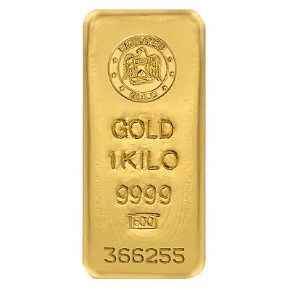

Since 1971, when Richard Nixon suspended the dollar’s convertibility to gold, the world has operated on a pure fiat standard. For the first time in history, every major currency is backed by nothing but collective confidence and the monopoly on legal tender.
Fifty-four years later, that confidence is being tested at scale.
Central banks have printed more than $30 trillion in new base money since 2008. The U.S. M2 money supply alone grew by 42% in just 24 months during 2020–2022 — the fastest expansion since the Civil War. Japan, the Eurozone, and the UK have run negative real interest rates for most of the past decade. Debt-to-GDP ratios now exceed levels seen at the peak of World War II.
In this environment of structurally unlimited money printing, gold is no longer just a “shiny rock” or a relic. It is re-emerging as the only major financial asset that cannot be diluted at the push of a button.
1. What Unlimited Money Printing Actually Means
- Central banks can create base money without limit.
- Commercial banks multiply that money through fractional-reserve lending.
- Governments fund deficits by issuing bonds that the central bank quietly absorbs (a.k.a. “QE forever”).
- The result: purchasing power of fiat currencies is systematically eroded over time.
Historically, the average fiat currency loses more than 99% of its value within 100 years. In an era of deliberate 2–8% inflation targets (and frequent overshoots), the half-life of money has shortened dramatically.
2. Why Gold Still Matters When Everything Is “Unlimited”
| Property | Fiat Currencies | Gold |
|---|---|---|
| Supply growth | Politically unlimited | ~1.6–1.8% per year (new mining) |
| Counterparty | Central & commercial banks | None |
| Seizure difficulty | One signature or sanction | Requires physical access |
| Censorship resistance | Complete control by issuer | High once in private vaults |
| Historical default rate | ~100% over centuries | 0% (5,000-year track record) |
Gold is the only globally recognized money that no single entity can print, freeze, or inflate away.
3. Three Distinct Roles Gold Plays Today
A. Purchasing-Power Preservation (The Classic Role)
From 2000 to 2025, the U.S. dollar lost approximately 55% of its purchasing power against everyday goods. Over the same period, gold rose from ~$280 to ~$2,700+ per ounce — a 9.6× increase.
Even during periods when gold “underperformed” stocks or Bitcoin, it consistently preserved (and usually grew) real purchasing power while fiat melted.
B. Tail-Risk Insurance Against Monetary Reset
Every major fiat collapse in history (Weimar 1923, Zimbabwe 2008, Venezuela 2018) saw gold explode in local-currency terms — often 100× to 1,000× in months.
When trust in monetary authorities finally cracks, the repricing happens violently and asymmetrically upward. Gold is the one asset that benefits directly from the destruction of faith in fiat.
C. Collateral in a New Monetary Order
As debt loads become unsustainable, proposals for monetary reset multiply: IMF Special Drawing Rights, BRICS unit backed by commodities, central-bank digital currencies with embedded gold features, or even a return to some form of gold convertibility at a much higher price.
In every plausible reset scenario, gold holders are either explicitly or implicitly favored. Those holding zero have no seat at the table.
4. The “Gold Does Nothing” Objection – Debunked
Critics love to say: “Gold pays no yield and produces nothing.”
True — until you remember that in a world of negative real yields, cash and bonds are guaranteed purchasing-power destroyers. Gold’s “yield” is the erosion rate of everything else.
When 10-year Treasury yields are 4.5% but CPI is running 7–9% (as seen repeatedly since 2021), bonds are negative ~4% real. Gold at 0% nominal is outperforming.
5. How Much Gold Makes Sense in the 2025–2030 Environment?
| Investor Profile | Suggested Gold Allocation |
|---|---|
| Conservative fiat holder | 5–10% |
| High-net-worth, debt-heavy country | 10–20% |
| Bitcoin/crypto native | 5–15% (diversification) |
| “Monetary reset” believer | 20–40%+ |
A simple rule of thumb used by many family offices: allocate enough gold to cover 3–5 years of real expenses in the event of currency debasement or banking holiday.
6. Practical Ways to Hold Gold in an Unlimited-Money World
- Physical allocated (bars/coins) in non-bank vaults — maximum sovereignty
- Instantly allocatable accounts (BullionVault, Goldmoney) — best liquidity/cost mix
- Gold mining equities or royalties — leveraged upside with dividends
- Gold-backed stablecoins (PAXG, XAUt) — useful for DeFi yield or fast movement
Diversify formats and jurisdictions the same way you diversify Bitcoin custody.
7. Final Thought
Unlimited money printing is not a bug in the current system — it is the feature that keeps the debt pyramid standing a little longer.
Gold’s role is not to generate income or beat the stock market every year. Its role is to survive the endgame of the fiat experiment with your wealth intact.
History shows that when the music finally stops, the people holding scarce, non-printable, universally accepted money are the ones who get to write the terms of the next cycle.
In a world that can create infinite claims on wealth, owning the one thing that remains finite is no longer fringe — it is basic financial hygiene.
NOTE
This Content is the copyrighted content of EE.GOLD. All rights are reserved. You are welcome to share or use our content only by including direct links to our website. Any other form of reproduction, distribution, or use without proper attribution is strictly prohibited.
This Content is intended solely for educational purposes. The information provided does not constitute financial or investment advice.
Please note that Digital Storage Receipt, Secure Storage Solutions, and Physical Gold Sales are the only services offered by EE.GOLD.
We strictly adhere to government regulations and are firmly against all illegal financial or investment activities globally.
For further inquiries, feel free to contact us through our official channels.








.png)