
Gold has always captivated humanity, not just for its beauty but for its enduring value. From ancient civilizations to modern investors, gold remains a symbol of wealth and stability. However, as global demand continues to rise and terrestrial reserves gradually deplete, the search for alternative sources of gold is gaining momentum. Innovations in deep-sea and asteroid mining promise to reshape the gold industry in ways once thought to belong only to science fiction.
Rising Demand and Declining Land-Based Reserves
The global appetite for gold shows no signs of slowing. Jewelry, technology, and financial investments all drive consumption, placing increasing pressure on traditional mining operations. Gold extracted from terrestrial mines has become more difficult and expensive to obtain. Many high-grade deposits have already been exploited, leaving lower-grade ores that require significant energy and resources to process.
This scarcity is not just an economic issue but an environmental one. Traditional mining can devastate ecosystems, consume massive amounts of water, and produce toxic byproducts. As the cost and environmental impact of land-based mining rise, innovators are turning their attention to more unconventional sources.
Deep-Sea Mining: Unlocking the Ocean’s Hidden Wealth
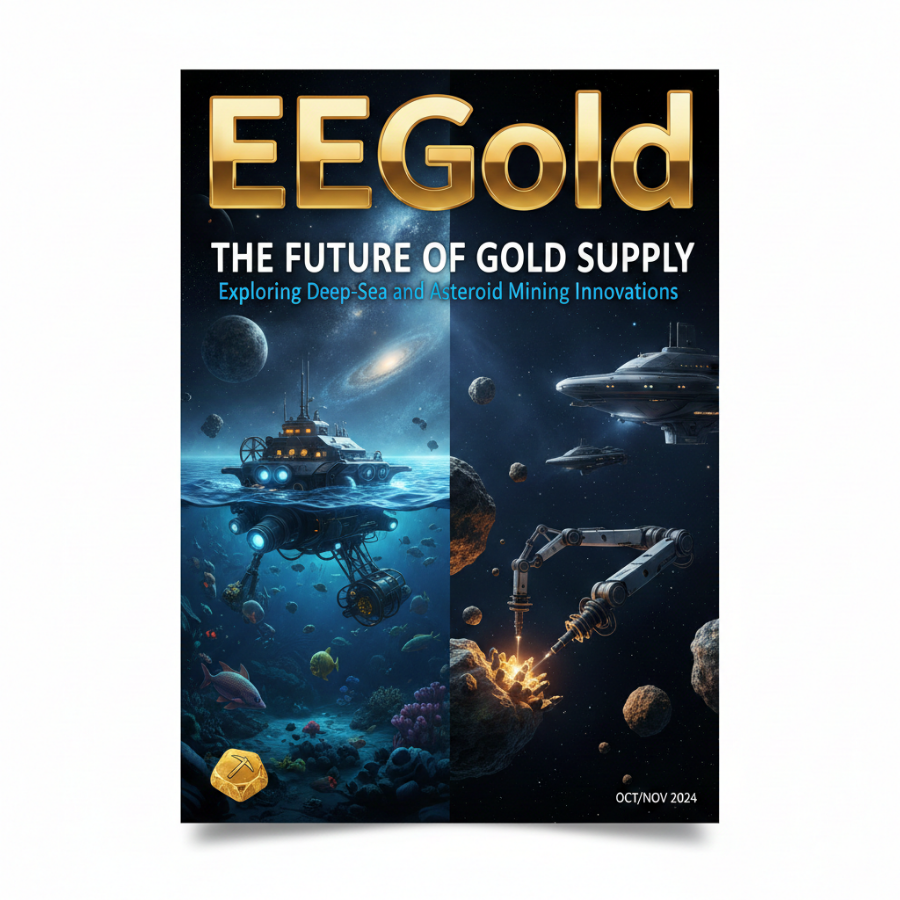
The ocean floor contains vast mineral wealth, including polymetallic nodules, hydrothermal vents rich in gold, and other precious metals. Deep-sea mining technologies aim to tap these resources without the extensive land-based environmental footprint.
Exploration of the seabed involves remotely operated vehicles and advanced sonar mapping to locate mineral-rich deposits. These machines can excavate gold-laden sediments and transport them to surface processing units. While still in experimental stages, deep-sea mining offers an enormous potential supply of gold that could supplement or even rival traditional mines.
However, this frontier comes with challenges. Ocean ecosystems are delicate, and disturbing the seabed could affect biodiversity in ways scientists do not yet fully understand. Balancing extraction with environmental stewardship will be critical for sustainable development of deep-sea gold mining.
Asteroid Mining: Gold from Beyond Earth
Even more futuristic is the concept of asteroid mining. Many asteroids contain high concentrations of gold, platinum, and other rare metals. Some estimates suggest that a single medium-sized asteroid could contain more gold than all of humanity has mined in history.
Advances in aerospace engineering, robotics, and space exploration are bringing this possibility closer to reality. Companies are designing spacecraft capable of prospecting, landing, and even extracting minerals from asteroids. The process may involve heating or breaking down rock to release metals, which can then be transported back to Earth or used in space-based manufacturing.
Asteroid mining offers several advantages. Space-based resources are not constrained by terrestrial politics, property rights, or environmental regulations. Additionally, as space infrastructure grows, extracting metals in orbit may become more cost-effective than transporting materials across Earth’s gravity well.
Yet the challenges are enormous. The costs of space missions remain high, and the technology required for large-scale asteroid mining is still in early development. Moreover, legal frameworks governing ownership and extraction rights in space are still evolving, requiring international cooperation.
Implications for Global Gold Markets
The advent of deep-sea and asteroid mining could dramatically alter the dynamics of the gold market. Increased supply from unconventional sources could stabilize prices, reduce scarcity-driven speculation, and make gold more accessible for industrial applications.
At the same time, these innovations could disrupt traditional mining communities and industries. Countries that currently rely heavily on terrestrial mining revenue may face economic shifts. Investors and policymakers will need to adapt to a future where the majority of gold may come from oceans or space rather than mountains.
Environmental and Ethical Considerations
While new sources of gold offer exciting opportunities, they also raise ethical questions. Deep-sea mining can threaten marine life and alter fragile ecosystems, while asteroid mining could accelerate space commercialization in ways that prioritize profit over long-term sustainability.
Balancing resource extraction with environmental and ethical responsibility will be a defining challenge for the next generation of mining technologies. Innovations such as precision robotics, low-impact excavation techniques, and careful regulation will play a crucial role in ensuring that gold mining evolves responsibly.
The Role of Technology and Innovation
Technological advancements are the driving force behind these new mining frontiers. Artificial intelligence, autonomous vehicles, and advanced materials processing all contribute to making deep-sea and asteroid mining feasible.
Robotic systems capable of operating in extreme pressure or zero-gravity environments allow precise targeting of mineral-rich zones, minimizing waste and environmental disruption. Meanwhile, space-based sensors and machine learning algorithms help identify the most promising asteroids for extraction. The combination of these technologies signals a transformative era in gold mining.
Looking Ahead: A Gold-Rich Future
The future of gold supply is poised to expand beyond Earth’s surface. Deep-sea and asteroid mining innovations promise to revolutionize the industry, creating new opportunities for investment, technology development, and sustainable resource management. While challenges remain, the pursuit of gold in oceans and space reflects humanity’s ingenuity and relentless curiosity.
As traditional gold reserves decline and demand continues to grow, embracing these unconventional sources may not just be an option but a necessity. The gold of tomorrow may be found in the depths of the ocean or orbiting silently in the asteroid belt, representing a new chapter in one of humanity’s oldest quests for wealth and wonder.
NOTE
This Content is the copyrighted content of EE.GOLD. All rights are reserved. You are welcome to share or use our content only by including direct links to our website. Any other form of reproduction, distribution, or use without proper attribution is strictly prohibited.
This Content is intended solely for educational purposes. The information provided does not constitute financial or investment advice.
Please note that Digital Storage Receipt, Secure Storage Solutions, and Physical Gold Sales are the only services offered by EE.GOLD.
We strictly adhere to government regulations and are firmly against all illegal financial or investment activities globally.
For further inquiries, feel free to contact us through our official channels.








.png)