


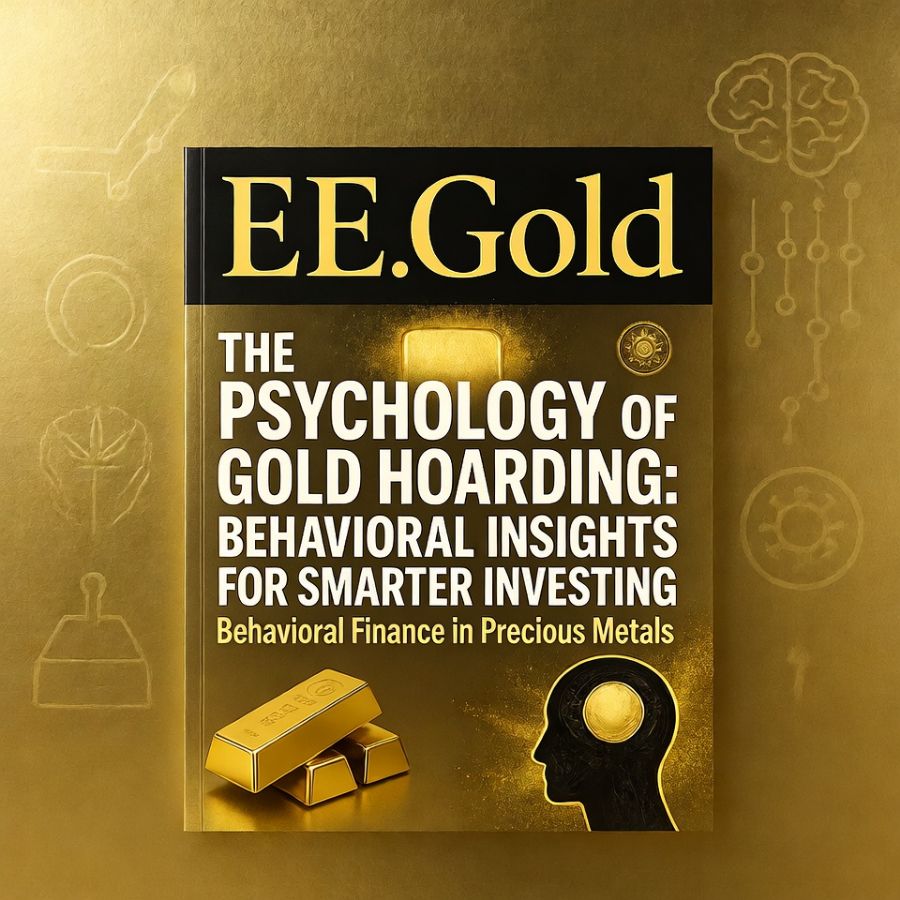
The Ancient Allure That Still Captivates Minds
Gold has enchanted humans for thousands of years serving as currency jewelry and symbol of enduring wealth. Beyond its physical properties the drive to accumulate and hold gold often stems from deep seated psychological forces. In times of uncertainty many turn to hoarding gold not just for financial reasons but as an emotional anchor against fear and instability. Understanding these behavioral patterns reveals why people cling to gold and how recognizing them leads to wiser investment choices.
Fear of Loss Shapes the Hoarding Impulse
Loss aversion stands out as a powerful driver in gold hoarding. People feel the pain of losing money far more intensely than the pleasure of equivalent gains. When markets falter stocks decline or currencies weaken gold emerges as a perceived safe refuge. The tangible nature of physical gold coins bars or jewelry provides comfort that paper assets or digital holdings cannot match. This bias pushes investors to stockpile gold anticipating worst case scenarios where other wealth evaporates. While protection makes sense excessive hoarding can lock capital away from productive opportunities.
The Comfort of Tangible Security
Unlike stocks or bonds gold offers something concrete to hold. In behavioral finance this appeals to the need for control and certainty. During crises like economic downturns geopolitical tensions or inflation spikes the psychological reassurance of owning something real and historically stable becomes irresistible. Hoarders often describe a sense of safety derived from possession itself. This emotional attachment mirrors aspects of hoarding disorders where items provide comfort and ward off anxiety though in investing it manifests as reluctance to sell even when diversification calls for it.
Herd Mentality Fuels Collective Accumulation
When gold prices rise and headlines scream safe haven investors rush in following the crowd. Herd behavior amplifies during volatile periods as seeing others hoard creates fear of missing out. Social proof convinces people that if everyone accumulates gold it must hold true value in chaos. This momentum drives prices higher temporarily reinforcing the cycle. Yet bubbles form when emotion overrides fundamentals leading to overvaluation and eventual corrections. Smart investors spot these waves and resist joining blindly.
Recency Bias Distorts Long Term Perspective
Recent events heavily influence decisions. Sharp gold price surges in turbulent times make recent performance seem predictive of endless growth. Investors hoard more believing the trend will persist indefinitely. Conversely prolonged stability might discourage accumulation overlooking gold's role in balanced portfolios. This short term focus ignores historical cycles where gold preserves value over decades but rarely delivers explosive ongoing returns. Awareness helps shift focus to long term allocation rather than chasing momentum.
Overconfidence and Emotional Attachment
Some hoarders overestimate their timing or the metal's invincibility. Overconfidence bias leads to holding excessive positions convinced personal insight trumps market signals. Emotional bonds form especially with inherited pieces or culturally significant items turning investment into sentiment. While attachment adds personal meaning it can hinder objective selling when rebalancing becomes necessary. Rational assessment separates emotional value from financial strategy.
The Endowment Effect in Action
Once acquired gold feels more valuable simply because it belongs to the owner. This endowment effect makes parting with it psychologically painful even if better opportunities exist elsewhere. Hoarders resist liquidation preferring to keep what they have regardless of opportunity cost. In diversified investing this bias can result in underexposure to growth assets while overexposure to a single store of value.
Breaking Free for Balanced Decisions
Recognizing these psychological drivers empowers better outcomes. Start by defining clear goals for gold exposure typically five to ten percent of a portfolio for hedging rather than dominance. Set rules for buying and selling based on fundamentals not emotion. Diversify beyond physical holdings into ETFs or mining stocks for liquidity. Regularly review positions to counter recency and herd influences. Consult objective advisors to challenge biases.
Turning Insight into Advantage
Gold hoarding often reflects primal instincts for security in an unpredictable world. Behavioral finance shows these impulses while natural can lead to suboptimal choices when unchecked. By understanding fear loss aversion and emotional pulls investors transform instinct into strategy. Gold retains its place as a timeless hedge but smarter allocation comes from mind over impulse ensuring wealth grows rather than merely survives.
NOTE
This Content is the copyrighted content of EE.GOLD. All rights are reserved. You are welcome to share or use our content only by including direct links to our website. Any other form of reproduction, distribution, or use without proper attribution is strictly prohibited.
This Content is intended solely for educational purposes. The information provided does not constitute financial or investment advice.
Please note that Digital Storage Receipt, Secure Storage Solutions, and Physical Gold Sales are the only services offered by EE.GOLD.
We strictly adhere to government regulations and are firmly against all illegal financial or investment activities globally.
For further inquiries, feel free to contact us through our official channels.








.png)