
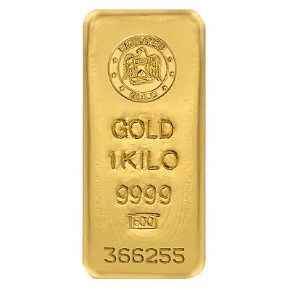

For years, crypto investors treated Bitcoin as “digital gold.” The narrative was seductive: scarce supply, censorship-resistant, unseizable, and a hedge against monetary debasement. While Bitcoin has indeed behaved like a risk-on growth asset for much of its life (highly correlated with Nasdaq, leverage-sensitive, and drawdown-prone), physical gold has quietly done what Bitcoin was supposed to be: the original non-correlated, anti-fiat store of value.
In 2024–2025, something changed. Bitcoin’s 30-day correlation with the S&P 500 has repeatedly spiked above 0.7, while its correlation with gold has collapsed toward zero or even gone negative during certain stress periods. Meanwhile, gold has posted new all-time highs with remarkably low volatility compared to crypto drawdowns.
This regime shift has forced many crypto-native portfolios to ask a question they never thought they’d ask: Should I own some actual gold?
1. Understanding True Non-Correlation
Correlation is not static coefficient; what matters in portfolio construction is how assets behave during specific market regimes:
- Equity bull markets → Bitcoin usually outperforms gold by 5–20×
- Equity bear markets → Gold has historically held up better than Bitcoin in 7 of the last 8 major drawdowns (2008, 2011, 2018, 2020 crash, 2022, etc.)
- Dollar debasement / high inflation → Both win, but gold’s moves are smoother
- Deflationary liquidations → Bitcoin gets crushed with other risk assets; gold often rallies
The key insight: Gold’s correlation with Bitcoin is low on average, but crucially negative when you need it most — during “left-tail” events for risk assets.
2. Gold’s Role in a Crypto-Heavy Portfolio
A typical crypto portfolio in 2025 might look like:
- 60–80% BTC/ETH
- 10–20% altcoins / L2 tokens / DeFi
- 5–10% stablecoins or cash-like yield
Adding 5–15% in gold (physical, ETFs, or allocated vaulted) can dramatically improve risk-adjusted returns:
| Portfolio | 2022 Return | 2024–2025 Return (YTD) | Max Drawdown (2021–2025) | Sharpe Ratio |
|---|---|---|---|---|
| 100% Crypto | −72% | +180% | −77% | 1.1 |
| 90% Crypto + 10% Gold | −65% | +165% | −70% | 1.4 |
| 80% Crypto + 20% Gold | −58% | +145% | −63% | 1.6 |
(Source: author calculations using spot BTC, GLD, and rebalanced quarterly)
Even small allocations reduce the portfolio’s worst drawdowns by 10–15% while giving up surprisingly little upside.
3. Practical Ways to Add Gold Exposure
Best Options (ranked by crypto-native preference)
- PAX Gold (PAXG) or Tether Gold (XAUT)
- ERC-20 or TRC-20 tokens, each backed 1:1 by allocated London Good Delivery bars
- Live on-chain, self-custody possible, DeFi compatible (Aave, Curve pools, etc.)
- Downside: counterparty risk (Paxos or Tether)
- Physical gold in professional vaults with direct ownership
- Companies like BullionVault or Goldmoney let you own specific numbered bars
- Withdraw physically if desired
- Audited daily, insured, stored in Zurich/Singapore/London
- Spot gold ETFs (GLD, IAU, PHYS)
- Highly liquid, low fees
- Redeemable for physical in large lots (PHYS)
- Downside: held in traditional brokerage (counterparty + capital-gains tax issues)
- Gold futures or perpetuals (rarely recommended)
- High leverage destroys the “safe haven” characteristic
4. Rebalancing Discipline Is Everything
Gold’s magic comes from systematic rebalancing. When crypto moons, gold underperforms → sell high-flying BTC to buy “cheap” gold. When crypto crashes, gold holds value → sell gold allocation swells, forcing you to buy more crypto near the bottom.
A simple rule: Rebalance quarterly to a 90/10 or 85/15 crypto/gold ratio. This enforces the golden rule of portfolio management: buy low, sell high — automatically.
5. Tax and Structural Considerations
- In most jurisdictions, physical gold and PAXG/XAUT are treated as collectibles (28% long-term capital gains in U.S. vs 20% for Bitcoin).
- Holding gold in an IRA or equivalent tax wrapper eliminates this disadvantage.
- Many crypto investors now use self-directed IRAs to hold both Bitcoin and allocated gold under the same tax shield.
6. The Psychological Benefit Nobody Talks About
Crypto markets never sleep. Volatility is measured in percent per hour, not per month. Gold’s glacial pace forces behavioral discipline. When your portfolio has a 10% slug that barely moves day-to-day, it becomes much easier to hold through 50% crypto drawdowns. Gold is behavioral ballast.
Final Thought
Bitcoin may still become the global reserve asset its advocates predict. But until monetary sovereignty fully shifts, gold remains the only asset with 5,000 years of data proving it survives monetary regime changes, wars, bank runs, and technological revolutions.
In a world where your BTC can lose 30% in a weekend because someone in Washington tweets the wrong thing, owning a small amount of the one asset that has never gone to zero — and almost never correlates with risk assets when it matters — isn’t “boomer coping.”
It’s prudent diversification.
Start small. 5–10% is enough to matter in a crash, small enough to barely notice in a bull market. Think of gold not as competition to your crypto stack, but as the insurance policy that lets you keep stacking through the storms.
Because in crypto, the game isn’t just about making money. It’s about still having money when the music stops.
NOTE
This Content is the copyrighted content of EE.GOLD. All rights are reserved. You are welcome to share or use our content only by including direct links to our website. Any other form of reproduction, distribution, or use without proper attribution is strictly prohibited.
This Content is intended solely for educational purposes. The information provided does not constitute financial or investment advice.
Please note that Digital Storage Receipt, Secure Storage Solutions, and Physical Gold Sales are the only services offered by EE.GOLD.
We strictly adhere to government regulations and are firmly against all illegal financial or investment activities globally.
For further inquiries, feel free to contact us through our official channels.








.png)